
Conversational Analytics
Executives type questions as if talking to an analyst and get numbers and charts instantly.
AI turns questions into data queries and explains where every number comes from.See details ›Know where your data lives, who uses it, how it flows and where personal data is stored.
Go ahead and try it. This screen simulates the system with sample data.
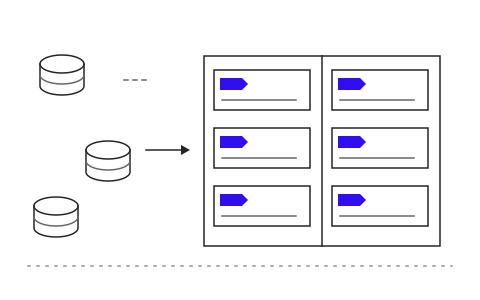
Build an organization-wide data catalog
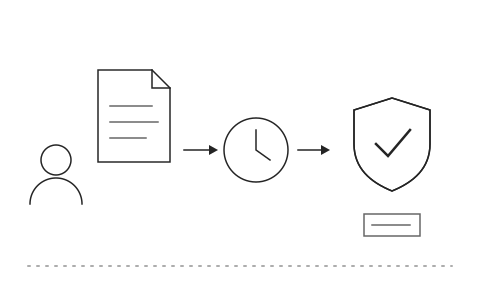
Handle data subject requests under PDPA
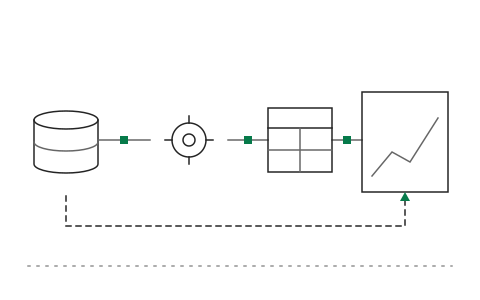
See data lineage from source to report
Many IT teams and DPOs cannot say with certainty which systems hold customers' personal data, who can access it, or whose Excel files contain copies. When a data subject asks for deletion or a copy under PDPA, someone has to ask each department in turn. AI projects stall on the question of whether the data is ready and can be used lawfully.
The PDPA and Data Governance platform builds a data catalog for the whole organisation, so you know where data lives, who uses it and how it flows from source to report. The AI scans databases and files to find personal data and classify its sensitivity automatically. Data subject requests are handled in one place, from intake and identity verification to fulfilment and evidence, within the legal deadline.
After go-live, the organisation answers PDPA requests within the legal timeframe without chasing departments, and the data team knows which datasets are trustworthy and ready for AI projects. Khaojai IT designs the governance platform to fit your organisation's structure and policies and connects it to your existing databases, ERP, CRM and file storage.
It depends on how many systems and databases need scanning, typically 3 to 6 months. We usually start with the systems that hold customer data directly, then expand to secondary systems and shared files.
Yes. It scans and connects to SQL databases, SAP, CRM, file shares and the cloud storage you already use, reading structures and data samples for classification. Nothing has to be moved out of the existing systems.
The AI proposes a category and sensitivity level with its reasoning, but a data steward confirms it before it takes effect. The system learns from corrections so later proposals are more accurate.
Every data subject request, access and classification change is logged with a timestamp and the person responsible. You can export a Record of Processing Activities (RoPA) and supporting evidence for audits.
AI in this system
Describe the problem your organisation faces. Our team and AI will recommend the right software and help you think it through.